What is the untechsavvy? Basically, the untechsavvy is a tech blog for people who know nothing about tech. Technology is ubiquitous, and its vastly improving every day. We now have smartphones as powerful as computers were 5 years ago. Computers themselves are becoming even more powerful and more portable than ever before. We live in the world where our cellphones may now come with Smart Watches and Virtual Reality headsets as accessories. Gaming consoles aren’t even just gaming consoles anymore, they’re turning into full-fledged home entertainment system.
You see, technology is a funny concept. What we thought of as the future in the past can turn out to be obsolete due to the invention of a new product that we never foresaw. With all these trends, it really is difficult keeping up with all the development. We need to filter out what is relevant to us, the everyday consumer. To separate the gimmicks from the essentials. To differentiate Apples from Androids. To providing the right kind of tech to the right kind of consumer. And that’s exactly what the untechsavvy is.
You see, most of us don’t have time to learn about the benefits of a Qualcomm SnapDragon chipset vs a MediaTek chipset for our phones. Most of don’t care about AMD or Intel in our laptops. Most of us use most of our devices simply because they “Just Work”. But the thing is, we shouldn’t settle for things that “Just Work” because these devices are increasingly taking a bigger part of our daily lives. We should always strive to get the best for us.
We’re at an age where there really is no best smartphone, tablet, laptop, tv, PC, monitors, smartwatch etc, because there are thousands of devices that are tailor fit of many different people. And thus, this blog is a guide for you, the average untechsavvy consumer, to find the best types of devices for you. Because, lets face it, technology is expensive. We don’t want to listen to hours of sales talk from people who don’t know what they’re talking about only to end up being stuck with a phone we don’t like for the next 3 years.
So, who is the untechsavvy? In many ways, it’s myself. I’m Benj, and I love learning about technology. But I’m no expert, just merely an enthusiast. I learn more and more about technology and consumer electronics everyday and I want to share it with you, my fellow untechsavvy. This blog is both my outlet for my excitement and my frustration to the most interesting topics regarding the tech industry, as well as a guide to everyone else who is sick and tired of listening to sales talk by people who don’t know the difference between Android and iOS.
With this blog, expect to see mostly news about smartphones, wearables, tablets, and the like mainly because these are the products that the general populace buys on a daily basis. The blog also includes guides on how to use your current tech, such as suggestions for applications and advice on how to make the most out of your phones in terms of battery life and performance. Occasionally, there will be posts about other tech developments such as smart home appliances, transportation systems, drones, robot barista, and basically anything involving the world of tomorrow. It’s an exciting world we’re all apart off, so grab your phones, laptop, tablet, kindle, or whatever you’re using to read this blog and explore the wonderful world of tech. You don’t need to be a techie to appreciate technology. In many ways, its good to be the untechsavvy.
You’ve seen it, you’ve dreamt of it, the newest iPhone, Galaxy or even Windows phone. You muster up all our courage to go to the nearest Verizon/T-Mobile/AT&T only to find out that you can’t afford it. You beg your parents for a birthday gift. You beg your boss for a raise. But at the end of the day, you can’t afford it. What the hell should you do?
Well fear not, even if you can’t afford the newest iPhone, there are still amazing alternatives available for every budget. Your phone is becoming more and more involved in your life, as it ceased from becoming a mere communication device, and a media consumption device in general. You should never settle for less than perfect and there are great phones at even the smallest price points.
1st Alternative: A Chinese Flagship Smartphone
As you will read on in a later article, Chinese smartphones have become more and more incredible as technology advances. The key advantage of these smartphones is that they are equally as good as the latest offerings from Samsung, Sony, HTC, and LG for half the price, without a contract. The phones use practically the same internal specifications, with similar batteries and high resolution screens. The reason why they can sell these phones at such a low price is the fact that it spends very little on marketing and relies purely on viral methods and word of mouth. Companies such as Xiaomi and OnePlus also rely on a system with limited quantities of available products which allow for a limited supply of phones for sale. They eliminated the need for stores as they sell mostly online.
All these flagships use a modified version of Android, with most of them looking and functioning similarly to an iPhone. They use aesthetics inspired by iOS, as well as the removal of the application drawer and the implementation of Apple innovations such as fingerprint scanners. In fact, one of the reasons as to why these phones aren’t more widely available in the United States is because of the fear that Apple might sue them for their designs being too similar.
These phones aren’t perfect however, they do harbor their own downsides. For one, you have to buy these phones online, as part of the reason why they are priced the way they are is because they eliminate the need for retailers. The fact that there are certain hurdles to buying most of these phones (Xiaomi for instance doesn’t officially offer their phones in the US and OnePlus selling their phones through an invite/pre-order system), its easier to buy from a third party re-seller which makes it even harder to purchase the phones.
Credit: oneplus.net
If you do take these risks into consideration, I would wholeheartedly recommend either the Xiaomi Mi Note or the OnePlus One. The Xiaomi Mi Note is the company’s latest smartphone which has the same specifications as the Samsung Galaxy S5 at $400, with a decent camera, a great screen resolution and the top of the lie processing package. It uses Xiaomi’s version of Android, MIUI which is one of the best functioning Operating Systems available. MIUI is also the best phone available at this price range if you are coming from iOS as it is the most similar to the iPhone. The OnePlus One is similar to the Xiaomi, however it uses a modified version of CyanogenMod, a version of stock (vanilla) Android with modifications such as Privacy Guard implementation, and a theme engine. I actually own a OnePlus One and I would even recommend it over an iPhone or Galaxy S. For $350, 64 GB of Storage with the best processing package of 2014, a decent camera, and an amazing sandstone textured back cover, its the best phone for money value.
Honestly, last year’s model is not a terrible option. In fact, its a better choice than most midrange priced offerings. Truth be told, most of last year’s models are still decent, if not amazing, phones. The iPhone 5S, the Samsung GS5, the LG G3, the Sony Xperia Z2/Z3, the Nexus 5, and the HTC One M8 are still amazing phones which are now at least $100-$200 cheaper. They offer specifications which aren’t even far off from each other. For the normal user, you will be able to do anything you want just fine on these devices.
If you had to choose, pick an old flagship phone over a current mid range phone. Older flagships have better processors, better screen resolution and more megapixels in their cameras. The most important statistic here is the processors. In Android devices, the OS itself takes up a lot of memory and power. Thus you need a powerful device to run the system properly. A more powerful device that is a year old is a better deal than an older device that is from this year, because it has the ability to properly handle the OS of Android. In the iPhone’s case, the last year’s flagship is still a decent deal which can still last a few years before it becomes obsolete.
Credit: htc.com
If you choose to go to this route, which is safer than the first route, I would recommend the HTC One M8 or the Sony Xperia Z2. The One M8 is an amazingly built phone with only one major drawback, its limited camera. However, its still a top phone to beat, with an amazing processor which can handle anything an average user throws at it. The Xperia Z2 is a great deal because its only difference with the Z3 is a slightly weaker processor (2.3 GhZ vs 2.5 GhZ) and a slightly better performance underwater, which won;t really matter to the regular user. Its also the king of battery life among its peers.
Credit: sonymobile.com
However, if you must settle for midrange, we do have 2 options
3rd Choice: Motorola
Motorola’s budget phone offerings are an amazing deal if you can’t afford to buy their flagship model. The Moto G offers a 720p HD display, with the best processor for mid range priced phones (Qualcomm SnapDragon 400). The Moto G also features an almost unmodified version of Android which enables it to run pretty smoothly despite not having a lot of RAM and a less powerful processor. It also allows for LTE usage and offers a decent, if not sub par camera. But for $179, you can’t find a better phone.
If thats even to steep for you, the $120 Moto E is the best option. It has a usable camera, a decent display, and a usable processor which should be enough for non intensive tasks. And for $150, you can get a Moto E with LTE 4G connectivity. While it may not be the best phone by any means, its an amazing deal for the lowest of all budgets.
Android One is a Google Project which provides the latest version of Android OS on a mid range device. The latest versions of Android don’t require too much memory compared to the older versions. Additionally, Android One devices run the most basic version of Android, unlike Samsung which uses its heavily modified Touchwiz. Thus, even if the device isn’t as powerful, it still can run properly. It offers the distinct advantage of being able to get the latest version of Android, without being dragged down by heavily modified software.
Android One is right now’s Nexus project, as the Google Nexus phones used to be the cheap but incredibly capable smartphones. But that changed when they released the Nexus 6 at $600, a far cry from the $350 Nexus 5. While few phones have been released for Android One, and the likelihood of the phones being released in high end markets such as the US being low as the project was meant to tap into developing markets, its still an intriguing concept one should watch out for.
Credit: intoday.in
There are big drawbacks, however. They generally have less RAM which does not make them practical for heavy usage. They also have lower resolution screens and less powerful MediaTek processors, which aren’t as reputable as Qualcomm or Intel chips. As a last resort tho, they do offer a great value for the software you are getting.
You don’t need the most expensive phone to have the best experience. Having a Chinese Smartphone, the Last Big Thing, or even the Best of the mediocre will be enough for the average user. For all their shortcomings, it does help save a couple of hundred dollars, for devices which are practically as useful for the average Facebook/Twitter/Intstagrammer who plays the occasional Candy Crush/Clash of Clans.
But if you had to pick one, Pick the ONE. The OnePlus One.
*Sorry for the recent delay. Both me and my graphics designer were swamped with schoolwork*
To continue where we left off last week, lets look at the next biggest names in the Android atmosphere. Two companies famous for everything except their smartphones. Introducing Motorola and Sony
Motorola was Nokia’s biggest competitor back in the days before smartphones. They revolutionized the industry by introducing the “flip” phone. A clam shell device that housed separate modules for the screen and keypad. They also released a set of early smartphones with the RAZR line, however this flopped with consumers. This had caused it to fall out of favor with normal consumers until the Chinese company Lenovo (a company we will feature in a later installment of this series) bought the struggling firm. Now Moto has regained a decent market share and a respectable line of smartphones, respectable enough to gain Google’s attention to create last years version of its Nexus Smartphones (another line that will be featured in this series).
Motoroloa has gained popularity with a niche market of power users as the phones come with a lightly skinned version of Android. Unlike the previous three OEMs I’ve listed in this series, Motorola phones come with the least modified version of Android. As the company doesn’t tinker too much with the software, it can release an update almost as fast as when Google releases it. This is unlike HTC, Samsung, and LG who took 3 months to make their version of the latest Android version, Android 5.0 Lollipop, made widely available.
Unlike most OEMs, Motorola doesn’t release many types of phones, in fact they only release 3. The Moto X, the Moto G, and the Moto E. They represent the three different price ranges, flagship, mid-rang and low end. The Moto X is considered their flagship model. It is a unique flagship model as it allows for almost full customization. Using the motomaker at motorola.com, you can create your own personalized version of the Moto X. You can have the back be made from leather, plastic, or even bamboo and wood. You can pick its color and even have your name or anything engraved on it. Of course the customized model will cost more than the base model, but this is a unique selling proposition that only Motorola can brag about.
Although the current Moto X is cheaper than normal flagships, it doesn’t show it with its specs. It still houses the same SnapDragon 801 chipset, but with a smaller battery and screen size, for those who prefer smaller handsets. It features a 1080p FULL HD AMOLED display, a 13 MP back and 2 MP front camera, and water resistance. Spec wise, its as good as any other flagship. In fact, it houses two distinct advantages from other flagships due to both the stock Android software and the ability to create your own Moto X. Although it may seem small, one feature of the Moto is the small Motorola dimple at the back which acts both as a finger rest and as a unique identifier of Motorola phones. Motorola has a version of the Moto X available in Verizon in the USA and in other European countries without a carrier contract called the DROID Turbo (or the Moto Maxx in Europe/Latin America). The DROID Turbo is a Moto X on steroids, featuring better a better processor, graphics chip, display and a battery almost 1.5 times the size of the original.
Motorola also produces a mid range model called the Moto G and a lower end model called the Moto E. Both of them feature downgrades over the Moto X, with the lower resolution screens (the G with a 720p HD display and the E not even having a HD display), less powerful processors, and the option to not have LTE support. However, they both do have the same stock Android experience. For some people, all versions of the Moto series offer the best value for money with the Android experience. They don’t offer the best experience, especially with a camera poorer than the already subpar Moto X camera experience, but for the price they offer, they are practically some of the best choices for their own price ranges.
So why isn’t it as popular as Samsung or LG? Because of Moto’s limited availability and because of its previous reputation. Motorola does have a chance to be a major player in the smartphone world if it continues to keep it up. While they do have their own flaws, the camera being not very good compared to its contemporaries being the biggest example, Motorola offers a not wide but very balanced range of phones for every kind of user.
Sony is most famous for its electronic ventures outside the mobile world. We all know them for their Gaming consoles, DVD players, music players, and other electronic gadgets. However, in the smartphone world, they often are seen as just playing catch-up. In fact, Sony is struggling so much that there are rumors regarding Sony selling its mobile division altogether. Sony used to partner up with the Swedish firm Eriksson when it first entered the mobile industry, competing with the likes of Nokia. However, when the partnership ended, it started using the Xperia line. Most of its phones look similar in build, only differing in size and specifications.
The Xperia Z line is the flagship line of the Xperia. They are often equipped with similar specifications with its competitors from Samsung, LG, HTC, and Motorola. The Xperia Z3 features a 5.0 inch 1080p FULL HD display, 3GB of RAM, expandable storage via SD Card, with the same SnapDragon processor featured in most of its competitors. Aside from that, Sony also features a unibody design made from glass, bound by metal at the sides. This, couples with flaps over the ports, allows it to have the best water and dust proofing of all major smartphones. The Z line also features some of the best battery performance out of any modern flagship. It features many battery saving modes, as well as a very efficient system to match its big battery. The Xperia Z3, features an IP 65 and IP 68 certification, meaning it can withstand being submerged in 3 meters of water for over 30 minutes. Now, while the water proofing is functional, Sony brings it to extreme levels that most users will probably not even need to experience. The Xperia Z line also comes with one of the best models for people who prefer a smaller phone for easier one handed use. The Z Compact line is one of the only small phones that barely give any compromise when it comes to specifications. The Z3 Compact features everything the Z3 has except for a 720p HD display and 2 GB of RAM with a smaller battery. However, even with the smaller battery, it tend to outperform even its bigger counterpart because the screen uses up less battery.
The Z line features some of the best camera hardware as Sony produces the camera lenses for its its competitors. The Sony Z1-Z3 had been very consistent, featuring a 20.7 MP camera at the back and a 2.2MP camera at the front. Sony improves in its software implementation, featuring both Optical Image Stabilization and amazing low light performance. It also features many camera modes, including the ability to integrate Augmented Reality by splicing together real pictures and cartoonish scenery.
However, the Z line was met with criticism with its release cycle. The Z line refreshes every 6 months, not annually like its competitors. This caused the phones to have very little differences wih each other. For example, the only difference with the Z2 and Z3 is a slight upgrade in its waterproofing (IP 55 and 58 to IP 65 and 68), a 0.2 bump in processor strength (2.3 GHz to 2.5GHz), a smaller battery (3200 mah to 3100 mah), and a more rounded design. Thankfully, Sony seems to be reverting back to the traditional annual cycle.
The Z line features top of the notch hardware with Sony’s own UI. Similar to Motorola, it features light customization. However, it does incorporate its own Sony products, such as a store owned by Sony for selling music and movies. It also incorporates Sony’s Power Optimization modes and a distinct look and feel that is uniquely Sony. Aside from that, the Sony UI features less modifications than most OEMs, except Motorola.
Sony also features the Xperia M line, which features the same Waterproofing capabilities, with a lower end screen and processor. It also features a plastic design in place of the metal design found in the Z series. The Xperia T line is similar to the Z line except it features lower specifications, but larger screen. The Xperia C features a 5.0 MP front camera and waterproofing, as well as a larger screen. The Xperia E is son’y budget line, similar in size to the Z compact but not similar in terms of performance.
Sony features amazing functionality with very little compromise. They feature amazing smartphones that have amazing battery life and the ability to withstand water and dust. They are as good spec wise compared to its competitors and even feature camera hardware that most of them use. In fact, the only major problem is its cycle that is currently being fixed. Which makes me wonder why Sony is struggling to sell. Though it can be attributed to its limited availability, in my opinion Sony has competitive line that should be able to match that of Samsung, LG or even HTC. As a fan who almost bought a Z3, it bothers me to see how poorly Sony is doing despite its best efforts. Hopefully Sony brings a game changer with the Z4 that will potentially give Sony its coming out party.
And there you have it, the 4 major smartphone manufacturers not named Samsung or Apple. In the wide world of Smartphones, there are a lot of major mainstream choices. However, we haven’t even seen the capabilities of the phones built in the world’s largest economy, China. Chinese smartphones have gone a long way, from being terrible Apple clones, to being halfway decent devices. In the next installment, we take a look at the lesser known brands such as Xiaomi, OnePlus, and Huawei and why they deserve more than just a second look.
In the previous article, we talked about the two companies that comprise 40% of the entire smartphone market share. In this installment, we discuss the majority of the 60%, the major players in the smartphone industry, namely HTC, LG, Motorola, and Sony. Like Samsung, they each have their own identifiers, despite having the similar base Operating System of Android. And trust me, all 4 devices are very different from Samsung, and from each other for that matter.
First on our list, we have the Taiwanese electronics manufacturer HTC. HTC had been making many smartphones in the past, mostly with Windows Phone. However, they really started to hit the map when they released the One series, with the HTC One Max, One M7, One M8 and most recently, the One M9. The HTC One series is most commonly known for three distinct features, the “BoomSound” speakers, the premium build, and Sense UI.
BoomSound speakers are HTC’s own front facing speakers. Among all smartphones, the HTC speakers are often touted as the loudest and most crisp sounding speakers. They are also known for being placed for optimal media consumption, being placed on the sides of the screen as to avoid being muffled with the hand when being held in landscape mode. In the earlier models, they used “Beats Audio” which, contrary to popular belief, isn’t speakers made by Beats by Dre, but rather an equalizer system.
The HTC is also known for how well built its phones are, specifically the One series. In fact, the build quality is one reason it won Best Smartphone Award in 2013 at the Mobile World Congress. The HTC one features a premium design with the right curves to fit the users hands. They also aren’t the largest phones available, with them being set at 5 inches. The back also features a brushed metal design which also gives it a premium look. It does bring the problems of not having a removable battery. Inside the premium design, HTC normally brings in the latest hardware available, with few exceptions, similar to Samsung flagships, normally bringing in the latest SnapDragon chip set for processing. It does however, stick to the 1080 Full HD display, even with the recent One M9. While it may not be the best possible mobile screen available, it’s still a good display which is more battery efficient than the norm of 1440 QUAD HD display. HTC has also been heavily criticized for its poor camera performance. The HTC camera is traditionally less capable compared to its competitors. It normally used Ultrapixel technology for its back camera, which resulted in better low light performance but worse performance over all. This is because the camera had less pixels, thus it wasn’t able to capture much detail.
Finally, HTC brings its own skin of Android called Sense. While Sense remains a bit less intrusive compared to something like TouchWiz, it’s still a more heavily skinned version of Android compared to basic stock Android. Sense has a special news feature built in called “Blinkfeed” which uses both your social media accounts and certain news websites to create a news feed for your homescreen. It also heavily modifies the user settings and the application drawer.
HTC is also unique for keeping to its roots and continuing to have Windows versions of most of their phones. This even extends to their flagships such as the HTC One M8. SO if you want the Windows Phone atmosphere with premium hardware, then HTC has you covered.
HTC also has a line of mid-tier phones called the Desire. These phones often have their own specialization, such as the Desire Eye which has a 13MP front and back camera with its own selfie modes. Typically, Desire phones also contain less power than the One series, but they do continue HTC’s trend of creating devices with amazing build quality with a solid user experience. HTC doesn’t always have the best hardware on the internals of the phones, but they produce some of the best looking and best functioning smartphones in the market.
LG had a horrible reputation with the Smartphone community in the past. Their Optimus phones were very laggy and dysfunctional, full of useless bloatware. They were always playing catch up to their Korean neighbors, Samsung. LG did have a similar MO to Samsung. They created a multitude of smartphones for both high end and low end users. They shipped their own heavily customized version of Android. But eventually, they were derided as Samsung’s less brilliant twin. Then, they grew tired of being the number 5 smartphone merchant, and thus produced the Optimus G, which gave birth to the G series of smartphones. The G series became so successful that the 3rd iteration, the LG G3 won the award for best smartphone in this year’s Mobile World Congress. Suddenly, LG was no longer a Samsung Wannabee, but now a bonafide contender.
LG is mostly known for its innovation in screens and design. The LG G2 and G3 have both been known for being both efficient with regards to screen to body ratio. In fact, the design of the G3 and the G2 both took up 76.4% and 75.9% of the front respectively. This means that the entire front of the phone is mostly composed of the screen. The LG G3 in particular is also known for being the first smartphone with 1440p QUAD HD. Its 5.5 inch screen has a pixel density of 538 pixels per inch. Each screen has that much detail, which is impressive for a screen its size. Another one of LG’s flagships, the LG G Flex series, is known for being a flexible phone known to withstand being bent. the current iteration, features a 6-inch curved 1080p HD display. The screen can withstand enough force to straighten its curve and return back to its curved form. It also features a self healing back cover which can not only withstand scratches, but also make the shallower scratches disappear. The Camera is also a strong point for LG in both its hardware and software. It features a 13MP shooter for both the G3 and G Flex, with Optical Image Stabilization, which enables the camera to focus on the subject even if the camera or the subject is moving. It also features software tweaks, such as the ability to take pictures without pressing the camera buttons by using hand gestures.
LG also has a removable battery for easy replacement, thus preventing the problem of battery degradation over time, increasing the phone’s life span. It also features expandable storage via micro SD card, in case 16 GB is no longer enough. The LG G series also contains the latest possible hardware, with the LG G Fkex 2 being the first smartphone to use Qualcomm’s SnapDragon 810, which is an octa-core processor. However, this did prove to be a problem for LG as they did not take into consideration the chipset’s tendency to overheat, proving that first isn’t always the best.
LG is also known for its own customized UI, LG UI. It used to be a very heavily skinned interface akin to Samsung’s TouchWiz, but over time it became less and less intrusive. However, like Samsung, it features lots of proprietary applications that can be considered as Bloatware because they are generally take up space and RAM. This includes such apps like “LG Voice Command”, “LG Smart World” among others. As a previous owner of an LG Optimus G2X, I can concur that I had over 20 apps that were basically useless, that took up both my internal memory and RAM, leading to terrible performance.
LG brings an amazing philosophy of design with its flagships. In fact, they create mid range versions of their flagship smartphones for users who can’t afford the best LG has to offer. Phones such as the LG Beat, LG G Stylus and LG G Mini are actually just lower spec’d versions of their famous G series. They look similar but have less processing power and less powerful screens. However LG always puts in some of the best designed phones that offer very little compromises. They offer a nice metal looking plastic design that enables it to look premium without giving up the removable back cover which houses the removable battery. It has self healing technology for the covers and one of the most beautiful displays available. And although LG has a strange trend of providing lower spec’d models of its own flagship (for instance the LG G3 is available in 2GB RAM and 3GB RAM with 16 GB and 32 GB internal memory versions), one can’t deny that their phones always exude a premium vibe. LG knows this and now teases us with creating “more premium than premium” with its next iteration of the LG G series. We can only wait and see.
Next time, we continue on to the second part of the second installment of this series as we tackle two of the lesser known but equally competent competitors of the smartphone world, Motorola and Sony.
On March 10, 2015, Apple finally unleashed one of its most anticipated products in recent memory, the Apple Watch. After being announced in Apple’s September 10 Keynote, Apple finally unveiled many more details about its first foray into the smartwatch arena. And as usual, with a new Apple product, the internet goes wild! Go to any website, be it a tech website like techradar.com or even a social news website like mashable.com, you can’t find anything else but multiple reports on Apple’s shiny new Watch as well as their newest MacBook. But before we get all caught up in this mass hysteria, we have to question whether or not the Apple Watch really is worth your time. So, Apple Watch, is it worth the hype?
What is the Apple Watch?
The Apple Watch is Apple’s first venture into Wearable technology. Wearables have recently gained popularity in the past few years, with wristwatches/fitness trackers being the most ubiquitous. Smartwatches are basically devices that act both as an extension of your phone and as a fashion accessory. The smartwatches in the current market are not standalone devices, they have to be connected to your smartphone. They are mainly used to control your cellphone without physically touching it, mostly to check your notifications, maybe even answer a phone call. Some even have their own native applications. But their function is currently limited to just being a way to use your cellphone without taking it out of your pocket.
So why is the Apple Watch unique? Because it’s the only smartwatch that is built to properly integrate into Apple’s own iOS. While there have been certain devices that can connect to Apple products, such as the Pebble, this is the first and only specialized wearable for iOS devices. The Apple Watch is available starting at $349/$399 for the Sport variant with an aluminium watch face and colorful plastic bands for the 38 mm and 42 mm sizes respectively. The Apple Watch with a Steel band would range from $549 – $1099 depending on the type of band used and the size of the watch face. Apple also offers a more high end version of this already high end product by launching the Apple Watch Edition with an 18-karat gold case with prices ranging from $10000 to $17000.
The Apple Watch brings something new to the table however, its integration with Apple Pay. The watch can be used as a means for payment in places where they accept credit cards. Because apparently in today’s society, we are too lazy to bring out our credit cards to pay for our purchases. However, it does present a unique selling point for certain individuals who do use Apple Pay on their iPhone 6. The Apple Watch also integrates the knob located in current watches to move around the interface without having to touch the phone as to not block your view while using it. Finally, the Apple watch also enables you to communicate with your peers with Apple Watches through Digital Touch. You can send Emoji, your own heart rate, doodles, or even a digital poke from your watch, and it will be received by your friends.
How the Apple Watch fares as a Smartwatch
Basically, the Apple Watch isn’t much different from other wearables. They can receive notifications. They can be used to see the weather. But functionally they are basically glorified notification trackers that are less than ideal from the dream smartwatch.
Apple’s main competitor in this regard is the Pebble. The Pebble first hit mainstream attention three years ago when it launched as a Kickstarter Campaign. The Campaign was able to raise a whopping 10 Million USD in 5 weeks, with over 66,000 individual backers. It promised a waterproof smartwatch for both Apple and Android devices that can last for weeks without charging as it used an e-paper display. It was simple but effective, as it provided the exclusive benefit of a functional watch that can be used on either iOS or Android that can be used continuously for days on a single charge. The current iteration of the Pebble, the Pebble Time, is a massive improvement over the current pebble as it features a more aesthetically pleasing design with a color e-paper display and a microphone for recording memos and notes, while keeping its waterproof capability and its ability to last for a week.
This presents a problem for the Apple watch as while the Apple watch is admittedly a more premium device in terms of look and feel, the Pebble Time offers more or less the same functionality of a smartwatch, while being the more practical option by being waterproof and lasting for 7 days as opposed to the Apple watch lasting at 18 hours. The Pebble Time is also cheaper, starting at $199 for the base model and $299 for the Steel model. With the Pebble working perfectly fine for iOS devices, its hard to justify spending more for a watch unless you really value both style and branding.
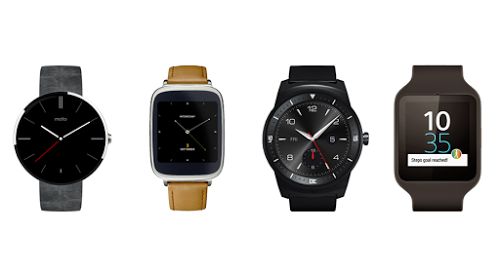
The Apple Watch’s other main competitor is Android Wear. Theoretically, its an extension of the never ending debate between Android devices and iPhones. While they aren’t direct competitors, as they only work on their respective home ecosystems, they do have distinct advantages over the other platform. One facet of Android itself that extends to its wearables is its many choices it offers. We have the Samsung Gear, the Sony Smartwatch, the LG G Watch, the Moto 360, and the Asus Zenwatch. They have their own distinct styles to match the user using it, unlike Apple’s “One size fits all” mantra. They also provide the only ROUND smartwatch. This is important because while some can argue that the Apple Watch is beautiful, society has been conditioned to think of beautiful watches are round. Android wear has functional watches which have a round shape.
The main issue with the Apple Watch, regardless of the existence of competitors, is Apple’s history of planned obsolescence. Apple designs products that go out of favor when a new model comes out. We have many iterations and generations of Apple devices, such as the iPod line. The iPod and its many derivatives (shuffle, nano, touch) have gone through many incremental upgrades on design and functionality over the past few years. We’ve had 6 different versions of the iPad, 3 different versions of the iPad mini, and 10(!) different iPhones. Sooner or later, there will be the Apple Watch 2, 3S, etc. And maybe for the Base model, maybe it could even be justified. But the Apple Watch is not the perfect product, especially as it is the first version. To most people, spending upwards to $1000 every year on a new iPhone and Apple Watch is unreasonable. Not to mention the impractically of buying the GOLD Apple Watch Edition knowing that there are these issues. In my opinion, the Apple Watch is something that can be skipped for now, if only for the fact that Apple doesn’t always hit it right the first time around.
Lets say that the Apple Watch edition is more than a smartwatch. It’s akin to buying a nice timepiece akin to Rolex, Omega, or Tag Heuer (Note that this blogger is proficient when it comes to technology, NOT when it comes to actual watches). You might say, it’s more practical to purchase a SOLID GOLD watch that you can connect to the internet with and use it as a phone. However, we have to understand that most modern high class watches were built to last for an entire lifetime. In some cases, such as the Moon Perpetua by IWC, they’re meant to last forever. With technology, it seems almost impossible with our current devices. First of all, the Apple Watch carries lithium ion batteries that need to be charged daily as they only last for 18 hours. They will degrade within two years, and become completely unusable without a power source as the batteries were never built to last, they were built to be functional until the next iteration of the Apple Watch.
Watches do have some sentimentality to them. Sometimes, they act as family heirlooms, being passed around from one Generation to another, something impossible with the Apple Watch. Aesthetically, the current crop of Apple Watches cannot even be compared to the beauty of well-built timepieces, with its many small yet significant parts that are all necessary to make the watch work. Finally, as a status symbol, watches have always indicated a sense of class and sophistication. Watches are elegant status symbols, while the Apple Watch, while not ugly by any means, will never have the same impact. In fact, Anna Kendrick described it best when she summarized the Apple Watch Edition:
We should be thanking Apple for launching the $10,000 "apple watch" as the new gold standard in douchebag detection.
In summary, the Apple Watch right now isn’t the best purchase for a timepiece, especially when the asking price for this device that lasts for two years is the same as that of a device that lasts a lifetime. Maybe we can justify buying the Apple Watch Sport or even the Metal Band Apple Watch, however, if you REALLY, REALLY, want an Apple Watch, maybe wait a year or two for it to even be close to game changing.
Now we can’t have an article series about smartphones without even discussing the two most recognizable names in the industry, Apple and Samsung. These two brands, as I mentioned in my previous article, both have a combined 40% market share on the smartphone industry. Of the millions of smartphones that exist, 40% own either an Apple or Samsung device. SO why do both these companies have an amazing stronghold on the entire industry? The key word here is Marketing. Apple and Samsung are two of the most well marketed products in the world. They are the two most visible smartphone brands and thus, most people tend to purchase and promote these products. Does that mean they’re the best? Well, as it is in all smartphones, the answer will always be ‘It Depends’.AppleCredit(s): http://www.theverge.com/products/iphone/37; https://www.iphoneshopusa.com/12-iphone-2g; http://www.gsmarena.com/apple_iphone_3g-2424.php; https://www.apple.com/lae/iphone-4s/specs/images/color_white.jpg;, http://store.apple.com/us/iphone
In 2007, Steve Jobs unveiled a product that would be the unrivaled cause for Apple overtaking Coca Cola as the world’s most valuable brand in 2014. The Apple iPhone was a creation that aimed to create a phone that was both incredibly smart and easy to use. The original iPhone was released at a time where most “smartphones” were owned and operated by high profile executives as they were the only people who could maximize its functions. However, Apple made it possible for the everyday person to own a smartphone by creating an environment that promoted ease of use and user friendliness in the form of its Operating system iOS. And while some phones could surf the internet, play music and videos, organize your tasks, and even implement programs and games but none were even close to the iPhone as it was presented in an intuitive and powerful package.
The iPhone has had a new and improved installment with incremental features released every year. These releases often improve screen size and resolution, processing power and speed, internal memory, charging capabilities, software fluidity and even fingerprint scanning technology. While some accuse Apple of perpetuating planned obsolescence and creating products destined to be replaced, one cannot deny that these products are amazing products for the things they are supposed to do.
Apple products are not heavy on specifications. In fact, the latest model, the iPhone 6, can be compared to a mid-range Android phone that costs half the price of an iPhone. Its 720p resolution, 1GB RAM, 8MP camera, 1810mAh battery and 1.4GHz processor seem paltry compared to its Android competitors. But the thing about specs is it’s not about the size, but rather, how you use it. The iPhone is incredibly fast, multitasking between apps won’t cause much stutter or lag in newer devices. And the beauty of iOS is that it is designed to not be as intensive on RAM due to its efficient A8 processor. In layman’s terms, the iPhone simply does not need to have the best possible specifications because it’s processor and operating system combination is incredibly efficient. The 8MP shooter does not mean much, but the iPhone’s image processing software makes it as good as its competitors with shooters upwards to 15MP. The iPhone does have one spec that it can easily say that it has the best; the TouchID fingerprint scanner, which even its closest competitors can say it’s the best of its kind. And while others such as Samsung and Huawei are catching up, the iPhone’s scanner is easily the easiest and most reliable one so far.
The ultimate message that Apple presents with its iPhone is that it’s a device that “just works” and works very well for the things it does. Now obviously this comes with many downsides as well. The iPhone is not friendly to customization. You are basically limited to how you choose to unlock your phone, what the mute button does, where your apps go, if you use folders or not, and what wall paper you will use. Thats. About. It. iOS is also something not friendly for the power user who uses his phone as more than just a phone. For instance, its harder to open up and download multiple files to use from the iPhone itself. You can’t extract compressed files, nor do you have much freedom to download items off the internet. You can’t visit websites that rely on flash. The iPhone, compared to Android devices, has its own limitations that may or may not be a deal breaker for you.
For the most part, iOS is fine. iOS is optimized to work for the iPhone, thus there are very little compatibility issues, if any at all. This is one major advantage it has over Android, as Android OS was never made for only a single device, it was made to be used by the majority of devices out there. Unlike Android, iOS was made only for iPhones and iPads. Aside from optimization, they also have an inherent advantage when it comes to Software Updates. The latest and greatest version of iOS will be available to you the day it is released and support is expected for 2-4 years.
The iPhone really is a matter of the mantra of “Less Is More”. They don’t try to pack in as many features as they can, and while this can be a bit limiting, the things it can do, it does very well. Camera’s in particular are things where the software enables the less than stellar hardware to shine in a field filled with other phones with camera sensors with higher megapixel ratings. While many Original Equipment Manufacturers rely on selling many different models to appeal to the different social classes, the iPhone has been treated as a social symbol in society. Owning an iPhone often results in a perception of high socio-economic class. Thus, Apple only sells four models of the iPhone at a time. The newest version (and starting this year, the larger Plus version), last year’s model, and the model the year before that. Currently, Apple has released the iPhone 6 and the iPhone 6 Plus, the newest models of the iPhone line which introduced a thinner and lighter phone with a larger screen with a higher resolution, an improved processor, newer version of iOS and NFC (Near Field Communication), used to integrate a new system of payments called Apple Pay. The also sell last year’s model, the iPhone 5S, which introduced the TouchID fingerprint scanner, and the iPhone 5C, Apple’s “budget” smartphone which is essentially a colored plastic version of the iPhone 5. Even if Apple only has these three models, they still have the same number of sales as all Samsung devices, which is amazing considering Samsung sells many models for different price ranges.
Samsung
Unlike Apple,the Korean electronics giant Samsung had tried to sell as many phones as possible. They seem to have a mentality of throwing everything to the wall and checking what sticks. They have high-end, mid-range and low-end phones and phablets, fit for potentially any consumer. And while Apple had become the phone that just worked, Samsung had tried to become the jack of all trades. Master of none? Maybe so, but we do have to applaud Samsung for its ability to create the most feature packed devices in the industry.
Samsung is no stranger to smartphones. It had been releasing smartphones for Symbian (Nokia), Windows Phone and even Palm. But they entered the Android world in 2009, with the Galaxy series of Phones. This is likely a response to the ever increasing popularity of the iPhone. The first Samsung Galaxy, aptly called the Samsung Galaxy, was released in April 2009 and featured a 3.2 inch AMOLED touch screen, with 3G capabilities, a trackpad and a 5MP camera. While this may seem incredibly low end for this generation, back then this was amazing.
Over the years, Samsung had released a wide array of smartphones, including the S Series, the Note Series, the A series, the K series, the Y series, etc. Samsung had tried to create a smartphone for all types of budgets. However, this did have the negative effect of creating slower low end phones as a result of the heavy Android System, as well as the heavy modification of Android done by Samsung. This modified Android Skin is called Touchwiz. Touchwiz represents what most people think of Android; very loud and colorful, jam packed with many features and overloaded/hard to navigate screens. This also led to the creation of the Z series, which runs on Samsungs own OS, Tizen. But for the purposes of this article, we will focus on Andorid/TouchWiz.
Samsung’s main line of phones is separated into two categories, the flagship smartphone and the flagship phablet. The smartphone line is the Galaxy S Series, starting with the Samsung Galaxy S in 2010. At 9.9 inches, it was the thinnest smartphone at the time of its release. It was then followed by the Galaxy S II and then the Galaxy S III which was widely known as the phone that really put Samsung on the map as a legitimate iPhone competitor. It was then succeeded by the Galaxy S4, the “Life Companion”, and finally the Galaxy S5, with the Galaxy S6 scheduled for release sometime within the next two months. The evolution of the Galaxy line includes a jump from 512MB of RAM to 3GB, the move from 480p screens, to 720p, then 1080p with the Galaxy S6 expected to have a 2K QUAD HD display. The Galaxy S Series also had Water and Dust resistance with the Galaxy S5. In terms of processor, it used variants of either Qualcomm’s SnapDragon, or its own homebrewed Exynos processing chips.
Samsung also released a line of large phones known as the Galaxy Note line. It’s often classified as a phablet as it looked to be a combination of a phone and a tablet. The Note series started out on October 2011 with a 5.3 inch AMOLED display, which is now considered a normal smartphone and no longer a phablet. This was followed with a Galaxy Note II, Galaxy Note III and the Galaxy Note 4, which introduced the first instance of the Edge variant, or a Galaxy Note with a curved edge in the display used for viewing Notifications. This feature is also expected to be implemented in both future Note series phones and S series phones. The Note’s defining features are its larger screen size, the inclusion of a stylus called the S-Pen, as well as stylus enabled functionality such as air gestures, and a larger battery.
Samsung also releases numerous mid-low range phones such as the Galaxy Ace series, the Galaxy Mega, Galaxy Royal, and the Galaxy Young. They also have the Galaxy A series, which is pretty much a smaller version of their flagship smartphones. Samsung also had a line of Smart Cameras running Android, as well as a Galaxy K with a big Camera Lens attached to the back of the phone. Samsung also releases lower end models of its flagship devices such as the Galaxy S Active and the Galaxy Note Neo. These are essentially stripped down versions of Samsung smartphones that have smaller/lower resolution screens, less powerful processors, and the lack of 4G LTE, as well as other hardware compromises. But essentially, the software remains the same.
Samsung is known for having a plastic design with a removable back that gives access to both the battery and the SD card slot. And while it may seem practical, it is often criticized for not looking very premium in its build quality. The plastic makes it look a bit cheap, even if the materials themselves feel premium. Samsung has responded to this with their newest iteration of the Galaxy S line, the Galaxy S6 with a glass design with metal around its sides, but that removed both the removable battery and SD card slot.
Samsung’s Touchwiz is often known for having a wide array of both useful and not so useful features, including but not limited to Heart Rate Monitors, Low Power Modes (including Ultra Power Saving which turns your smartphone into an old Nokia dumbphone), eyeball tracking, handwave gestures (for unlocking your phone without touching) among others. Samsung Touchwiz is also notorious for including many pre loaded applications such as Samsung Apps, S Voice, Game/Social/Music/Readers Hub, S Memo, S Health, and S Suggest. Now the problem here is that Samsung includes so many of its proprietary software that users hardly use. This makes it become “bloatware” as it simply is unusable and it slows the phone down. Worst of all, it is not uninstallable, thus it just eats up precious memory. While Samsung has always been o par in terms of specifications, users often feel bogged down with the experience. This is especially true with its lower end models, as it is often made even slower. Furthermore, the development of Touchwiz also prevents users from getting timely software updates as Samsung first needs to develop Touchwiz to fit the newest version of Android.
Despite these problems, Samsung phones still are among the best smartphones available in terms of specs and usability. It’s useful features, such as its removable battery (to prevent battery degradation and to enable easy replacement), battery saving modes, AMOLED display (with incredibly vivid colors and deep blacks that enable the screen to use less power), and its wonderful camera that is comparable to that of the iPhone make it a top contender deserving of all its accolades. Samsung has worked hard at what it does and it shows in its wonderful products. The Samsung Galaxy Note was easily one of the best smartphones in 2014, if not the outright best. The Samsung Galaxy S6 is one smartphone worth being excited for as it brings a new glass and metal design with improved software features. Samsung has not stopped in its quest to become the undisputed number 1 in the smartphone world.
However is it the best Android Smartphone? Or the best Smartphone in general? In the next installment of this series, you’ll take a look at Samsung’s closest competitors who are as deserving of that top place as Samsung.
Credits to Chris+Martin via pcadvisor.co.uk {http://www.pcadvisor.co.uk/test-centre/mobile-phone/3265117/best-android-smartphone-2015-uk/}
The smartphone market has always been dominated mainly by the two major players in the game, Apple and Samsung, with each of them taking a 20% market share in the smartphone industry. The most commonly heard terms with phones that aren’t an Apple iPhone or a phone from the Samsung Galaxy series is always “Is that a Galaxy?”, “Why didn’t you just buy an iPhone?” or even “What the hell is WIndows Phone?”. Now, we all know how big the market is, almost everyone uses a smartphone. However, as The Guardian has pointed out, . Even if Android itself takes up 81% of all mobile operating systems used and iOS only takes up 15%. With both companies selling at least 74.5 million smartphones world wide, its remarkable that Apple even tied with Samsung as Apple only sells 3 iPhone Variants per year compared to the Numerous Samsung Galaxy Phones. Even more remarkable is the fact that Lenovo, the third largest smartphone seller, only holds a 6% market share. And this was after its merger with Motorola.
The point is, the first phone that comes to our minds is the iPhone, the Granddaddy of all Smartphones. And if we ever see an Android device, we always think of Samsung. But there are lots more options to choose from. We have amazing phones from LG, Sony, HTC, Motorola and other big players. Even Nokia and Blackberry are both trying to making a comeback. And this doesn’t even touch on the surface of the Chinese Smartphones, such as Lenovo, Xiaomi, Huawei, Oppo, OnePlus, etc. The world of Android (and smartphones in general) is quite varied. In fact, in a later article, you’ll understand that even the Android you see in a Samsung phone is quite different from the Android you see in a Sony, an HTC, an LG, a Xiaomi, and a Huawei. But right now, we first have to understand what each smartphone manufacturer is as a brand and how it reflects on their products, With this, we can find out if what they have is the best fit for us.
Part One focuses on the big dogs, Samsung and Apple. Part Two will look at its more well known competitors. Part Three will venture into the world of Xiaomi and the rise of the Chinese Original Equipment Manufacturer and why their phones deserve your attention. Part Four is a Special Feature into the Google Nexus Line. Part Five will look at the leftovers such as Nokia/Windows Phone. Part Six will be a recommendation done after the article on Android OS and its many, many forms.